Advisory Board
International Advisory Board
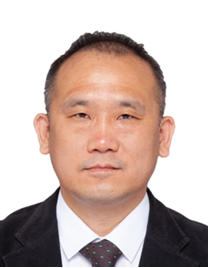
Prof. Kai Sheng
kaisheng@xidian.edu.cn
Professor Kai Sheng (Member, IEEE) received the B.E. degree in Information Engineering from Central South University, Changsha, China, in 2000, and the Ph.D. degree in Risk Engineering from the University of Tsukuba, Tsukuba, Japan, in 2006...
Read Full Biography →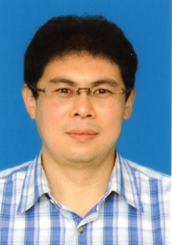
Prof. Chaoyuan Cui
cycui@iim.ac.cn
Chaoyuan Cui is currently a professor in Institute of Intelligent Machines, Chinese Academy of Sciences, China. He received his B.S. degree in mechanical engineering from Inner Mongolia University of Technology in 1996, Ph.D. degree in computer science from University of Tsukuba in 2005. His research interests are in trustworthy AI, tiny machine learning and embodied intelligence...
Read Full Biography →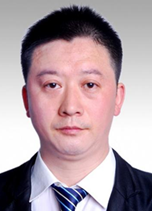
Prof. Zigang Chen
chenzg@cqupt.edu.cn
Zigang Chen received the M.S. and Ph.D. degrees in computer science from Huazhong University of Science and Technology and Beijing University of Posts and Telecommunications, respectively. He is currently an Associate Professor at Chongqing University of Posts and Telecommunications...
Read Full Biography →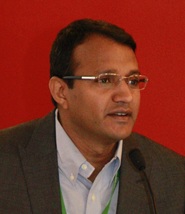
Prof. Ajith Abraham
Current Director of Machine Intelligence Research Labs (MIR Labs), which has members from more than 100 countries. Dr. Abraham's research and development experience includes more than 27 years in the industry and academia. He received the M.S. degree from Nanyang Technological University (NTU), Singapore, and the Ph.D. degree in Computer Science from Monash University, Melbourne, Australia....
Read Full Biography →Prof. Kai Sheng
Professor Kai Sheng (Member, IEEE) received the B.E. degree in Information Engineering from Central South University, Changsha, China, in 2000, and the Ph.D. degree in Risk Engineering from the University of Tsukuba, Tsukuba, Japan, in 2006. From 2006 to 2015, he served as a Research Engineer at CARMATE Corporation, Tokyo, Japan, where he focused on in-vehicle sensing systems and driver assistance technologies. He then joined Dongfeng Motor Corporation, Wuhan, China from 2016, as a deputy Chief Engineer in the R&D Center, contributing to vehicle electronics and intelligent control systems for passenger vehicles. He is currently a Professor at the Faculty of Infor-X, Xidian University, Xi’an, China and also at the Guangzhou Institute of Technology, Xidian University, Guangzhou, China, where he leads research initiatives at the intersection of artificial intelligence and resilient engineering systems. He is affiliated with the State Key Laboratory of Electromechanical and Integrated High-Performance Manufacturing, and also with the State Key Laboratory of Collaborative Intelligence Systems, Xidian University, Xian, China His research interests include computational intelligence, autonomous driving, and smart resilience systems with particular emphasis on developing robust perception and decision-making algorithms for automated vehicles under uncertain and adversarial conditions, as well as designing adaptive infrastructure systems for next-generation transportation. Professor Sheng has authored or co-authored several peer-reviewed journal and conference papers, including publications in IEEE Transactions on Industrial Informatics, IEEE Transactions on Intelligent Transportation Systems, and IEEE Cybernetics. He has served as a Technical Program Committee member for multiple international conferences and as a reviewer for leading journals in the fields of intelligent vehicles and computational intelligence. He is actively involved in industry-academia collaborative projects, with funded research in autonomous driving perception, planning, and smart resilience evaluation.
↑ Back to Advisory BoardProf. Chaoyuan Cui
Chaoyuan Cui is currently a professor in Institute of Intelligent Machines, Chinese Academy of Sciences, China. He received his B.S. degree in mechanical engineering from Inner Mongolia University of Technology in 1996, Ph.D. degree in computer science from University of Tsukuba in 2005. His research interests are in trustworthy AI, tiny machine learning and embodied intelligence.
↑ Back to Advisory BoardProf. Zigang Chen
Zigang Chen received the M.S. and Ph.D. degrees in computer science from Huazhong University of Science and Technology and Beijing University of Posts and Telecommunications, respectively. He is currently an Associate Professor at Chongqing University of Posts and Telecommunications. He serves as a core researcher at both the Chongqing Key Laboratory of Cybersecurity Monitoring and Governance and the Chongqing Low-Altitude Safety Assurance Technology Innovation Center. Additionally, he is Director of the Expert Studio for Collaborative Governance of Low-Altitude Security, School of Cybersecurity and Information Law, Chongqing University of Posts and Telecommunications. His research focuses on the Internet of Things (IoT), the Internet of Vehicles (IoV), the Internet of Drones (IoD), unmanned aerial vehicles (UAVs), and intelligent security systems. He has led multiple nationally and provincially funded research projects, including forensic analysis of electronic data from intelligent connected vehicles, explainable electronic data forensics, sensitive information detection on publicly exposed network surfaces, and global multimodal advertising recognition. To date, he has authored nearly 40 peer-reviewed articles indexed in the Science Citation Index (SCI) and holds over 10 authorized invention patents.
↑ Back to Advisory BoardProf. Ajith Abraham
Current Director of Machine Intelligence Research Labs (MIR Labs), which has members from more than 100 countries. Dr. Abraham's research and development experience includes more than 27 years in the industry and academia. He received the M.S. degree from Nanyang Technological University (NTU), Singapore, and the Ph.D. degree in Computer Science from Monash University, Melbourne, Australia. He works in a multi-disciplinary environment involving machine (network) intelligence, cyber security, sensor networks, Web intelligence, scheduling, data mining and applied to various real world problems. He has given more than 100+ conference plenary lectures/tutorials and invited seminars/lectures in over 100 Universities around the globe. As an Investigator / Co-Investigator, he has won research grants worth over 100+ Million US$ from Australia, USA, EU, Italy, Czech Republic, France, Malaysia and China. In these areas, he has authored / co-authored more than 1,100+ research publications out of which there are 100+ books covering various aspects of Computer Science. One of his books was translated to Japanese and few other articles were translated to Russian and Chinese. About 800+ publications are indexed by Scopus and over 500 are indexed by Thomson ISI Web of Science. Some of the articles are available in the ScienceDirect Top 25 hottest articles. He has 700+ co-authors originating from 40+ countries. Dr. Abraham has more than 25,000+ academic citations (h-index of 78 as per google scholar). He has given more than 100 plenary lectures and conference tutorials (in 20+ countries). For his research, he has won seven best paper awards at prestigious International conferences held in Belgium, Canada Bahrain, Czech Republic, China and India. He serves/has served the editorial board of over 50 International journals and has also guest edited 40 special issues on various topics. Currently Dr. Abraham is the editor-in-chief of Engineering Applications of Artificial Intelligence (EAAI) and serves/served the editorial board of over 15 International Journals indexed by Thomson ISI. Since 2008, he Chairs, the IEEE SMC Society Technical Committee on Soft Computing and also represent the IEEE Computer Society Distinguished Visitors Program in Europe (2011-13). Under his direct academic supervision, 12 students received Ph.D degrees and is currently supervising 8 Ph.D. students in different Universities in Europe, USA, Africa and India. He has examined over 100 Ph.D. theses. Besides an active Volunteer of ACM/IEEE, he has initiated and is also involved in the organization of several annual conferences technically co-sponsored by IEEE/ACM: HIS (16 years), ISDA (16 years), IAS(12 years), ECDM (9 years), NWeSP (8 years) NaBIC (8 years), SoCPaR (8 years), CASoN (8 years), IBICA (7 years) etc...
National Advisory Board
Geremew Sahlu, Professor, Civil and Environmental Engineering, Geremew.Sahlu@aau.edu.et
Girma Zerayohanes, Professor of Civil and Environmental Engineering, Girma.Zerayohanes@aau.edu.et
Mohammed Abdo, Professor of Electrical and Computer Engineering, Mohammed.Abdo@aau.edu.et, Review Board
Nurelegne Tefera, Professor of Chemical and Bio Engineering, Nurelegne.Tefera@aau.edu.et
Aramde Fetene, Associate professor of Urban & Reginal Planning, Aramde.Fetene@aau.edu.et
Asregedew Kassa, Associate professor of Infrastructure & Technology Mang, Asregedew.Kassa@aau.edu.et
Solomon Tesfamriam, Associate Professor of Renewable Energy Technology Center, Solomon.Tesfamriam@aau.edu.et
Surafel Lemma,Associate Professor of Information Technology and Engineering, Surafel.Lemma@aau.edu.et
Zebene Kifle, Professor of Chemical and Bio Engineering, Zebene.Kifle@aau.edu.et
Shegaw Ahmed, Associate Professor of Chemical and Bio Engineering, Shegaw.Ahmed@aau.edu.et
Shimelis Admassu, Professor of Chemical and Bio Engineering, Shimelis.Admassu@aau.edu.et
Yilma Sileshi, Professor of Civil and Environmental Engineering, Yilma.Sileshi@aau.edu.et